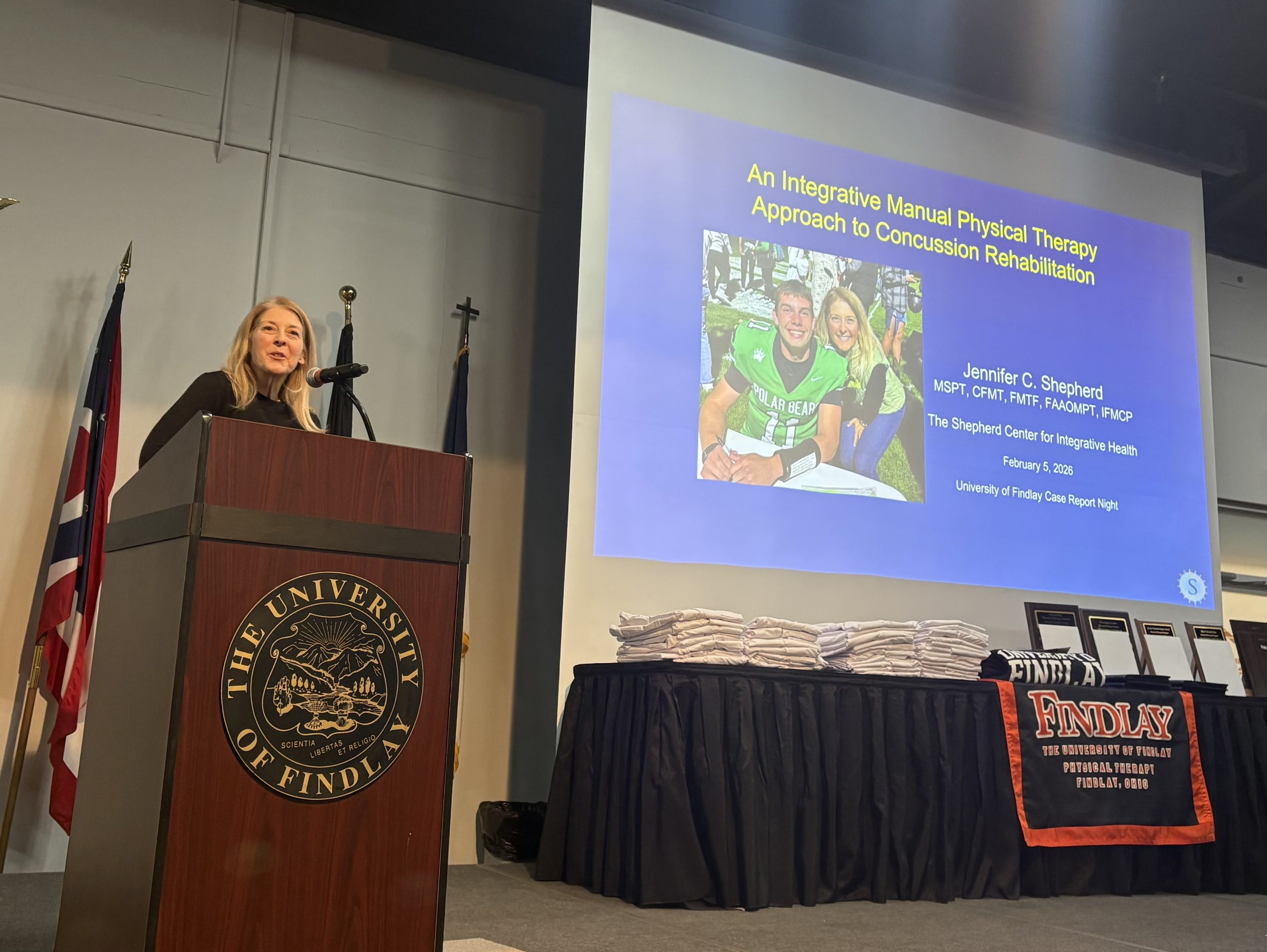
This past week I presented an exciting, novel case on how I helped a 17 year old boy overcome challenges with school performance, mood regulation-particularly anger management, organization, sleep, and memory. As I’ve been exploring and integrating this work into my clinic, I have been keen to find ways to measure improvements, knowing the need of sharing this work with the greater medical communities.
One of the presentations was to a university Physical Therapy Program whose audience was faculty, students, and parents. Here is what shared about my experience on my social media accounts.
“Innovation, curiosity, seeking to understand why…
“Any questions…?”
Crickets…you could hear a pin drop.
Last night, I shared my case study in which I helped a 17-year-old boy restore the health of his brain through precise manual assessment and structural treatment of the cranium, dura, cranial nerves, venous system.
The research supported the work.
The outcomes showed the improvements.
The photos document the changes in his body and his quality of life through his big smile.
I shared basic anatomy and physiology and how it can become impaired and inefficient in its function when forces enter the system. Fluid dynamics, pressure systems, compressive forces, length tension relationships.
That research is there too – in the fascial world.
As well as the research that we have such sensitivity in our hands to feel.
It’s physics, basic physics…but it’s hard to quantify in human tissue. And let’s be honest, there are many things about the amazing human body that we may never truly understand, which does not mean that they do not exist.
It makes all the sense in the world when I explain it…however the concept of assessing the health of deeper structures is foreign as most of our learning is focused on symptoms and muscles and sometimes if we’re lucky joints and nerves – but separately, not as part of a functioning whole, all parts needing to be healthy, which includes healthy movement, to have healthy functioning.
Systems based, whole person approach to optimizing the functioning of human…
After the presentation, people came up to me with comments and questions of thanks and curiosities…it took a bit for the concepts to sink in.
Changing bodies…changing lives.
Let’s discuss…and discuss how we can bring qualitative research into the world of health and medical.“
A grandparent came up to me and said, “I didn’t understand a thing you were talking about, but what I did understand was the changes in numbers that showed such improvement…and the change in his face and smile.”
Other faculty came up to me, with comments of gratitude for introducing these concepts.
But the concept of Structural Health should really not be that foreign. Unfortunately, the pendulum of our medical system has swung far towards reductionism, which is looking at parts, not at the whole, comprised of interconnected, integrated parts.
The medical system has gone away from touching people, relying on scans, labs, and technology. Our hands, especially those hands gifted in restoring structural health, can feel these areas, structures, tissues in the body that have lost healthy mobility and function, most often to to trauma and impacts, but also to overstrengthening in suboptimal postures, too much sitting, surgeries and inflammation.
The research communities seem intent on showing that Manual Therapy does not change tissue structure. It is VERY difficult to measure restrictions in tissue and what our hands can feel.
The human body is amazing…so many parts and pieces, all designed to work together for vitality of the human. Complex, but not necessarily complicated once one can look at both the parts and the whole.
All I can do is share my truth and experiences of what my trained hand can feel…and the truths and stories of my patients who are experiencing improved health and vitality once we began to address both their structural and functional health, instead of only chasing symptoms…and keep asking for help in the research world!
There are many more lives that are in need of help.