

“What do you do, Jen?” I’m a Physical Therapist…
I was trying to work on Mentorship content during my 8th grader’s soccer practice. I do love talking about my work…however, it constantly reminds me of how much work we need to do to expand the knowledge and skill set of doctors, physical therapists, athletic trainers, etc…
We covered the dad’s hip pain and what his doctor recommended (nothing other than severe arthritis, joint degeneration), the mom’s shoulder pain, the teen swimmer with shoulder pain (the athletic trainer insists it is because his core is weak, and is doing cupping and scraping).
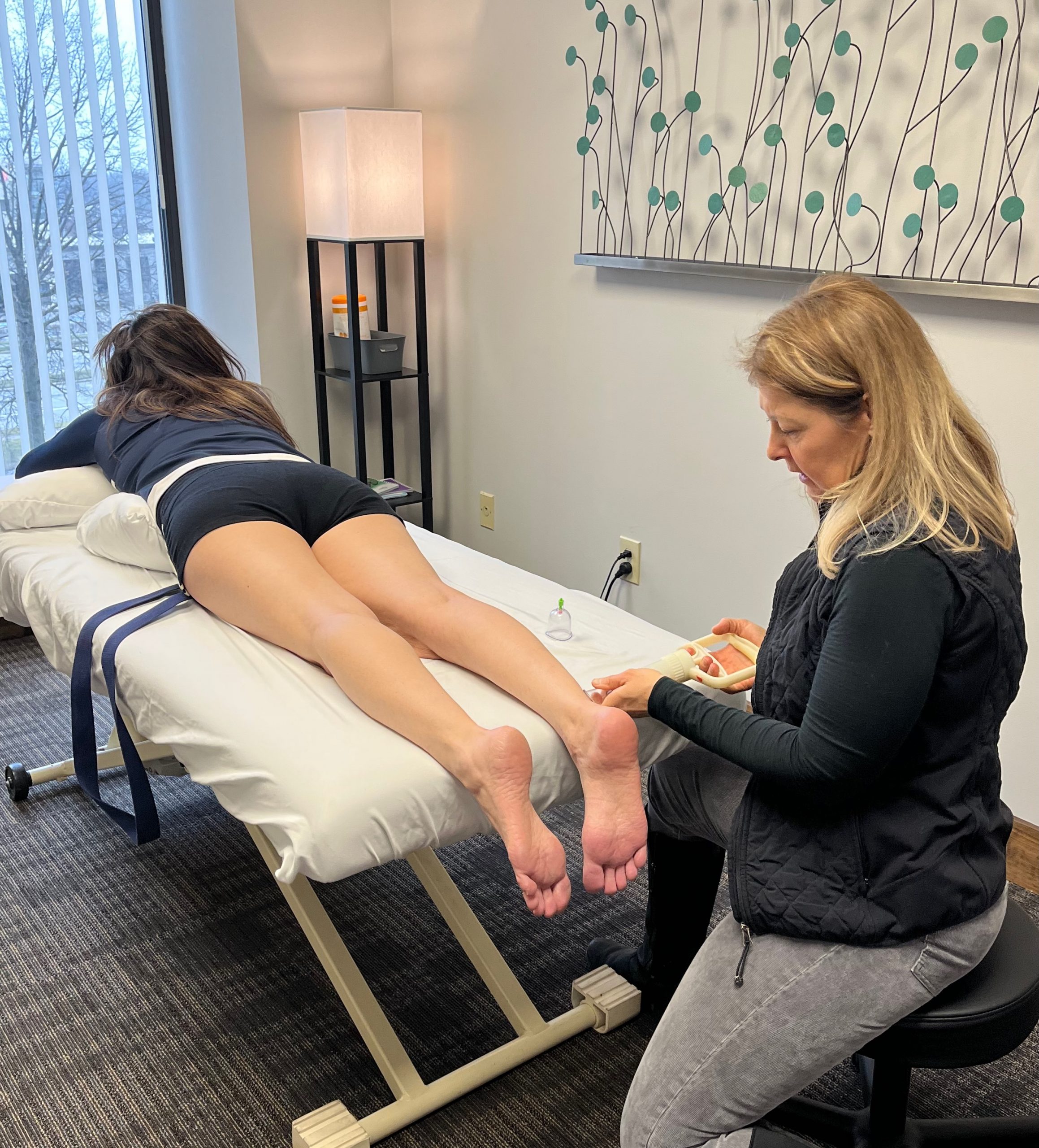
Don’t get me wrong — yes, most of us need help with “true core” support. And while I’m not a fan of scraping, I do still cup to mobilize tissue that needs lifting and space, especially for improving lymph flow, on occasion. These concepts are still looking at parts of the body that are showing inefficiencies and dysfunction. These strategies can, and often do help that specific tissue, but not always the bigger picture of what’s driving strain that drives pain.
Many practitioners are looking at parts, but missing the whole…
I explained how I observe specific movements…walking, throwing, cycling, even swimming, and how the trained eye can see where movement flows through the body with ease and where it doesn’t. When we have areas in the the body that don’t move well, the demand for movement is STILL there and gets transferred to another area of the body that was NOT designed to handle that load – leading to increased strain on joints, muscles, and tissues over time.
For example, in swimming…most of us, especially our kids, sit all day long, getting tight in the front of the chest and losing extension and rotation of their mid and upper backs. The pelvis also gets stiff. Maybe there have been old falls or injuries to other areas of the body which also result in lost mobility of the tissues. All of this results in many things including:
- stiffness throughout the whole upper torso (and the pelvis) (not only the muscles, we have to consider deeper)
- subtle pulling out of efficient alignment (the ball of the shoulder should stay on axis and spin with movement)
- the need for the body to find an opportunity to compensate to make up for lost mobility
The body needs rotation and extension for swimming…and for throwing, running, just about everything!
If I can’t get the motion it needs, it will find another place to get it.
Increased demand on a joint that is not in a great position results in wear and tear.
Complex, but not complicated.
Simple, when you look at the big picture, break it down, and put it back together into the whole.
How I would treat said swimmer…
- efficient foam roll program for length and rotation of the entire spine
- manual therapy for the pericardium, deep tissues of the chest, shoulder girdle and glenohumeral joint, cervical spine
- true core stability of the neck, shoulder girdle, shoulder and pelvis, teaching him to connect his feet to automatically engage his core when he is lifting and being aware of alignment…foam roll BEFORE lifting
So not only are we addressing inefficient mechanics that are driving strain, wear and tear, and pain, but also, by improving the structural and functional efficiency throughout the entire body, we are helping him prevent future injuries and improve his sports performances. Winning!!!
I’d love your thoughts! Send them to me at info@tscfih.com